


THE MISSION
The IUAES Commission on Anthropology and Education was established in 2015 by David Shankland, Director of the Royal Anthropological Institute of Great Britain and Ireland, who was the Chair until March 2024. The principal aims were to connect researchers, educators, and students who share an interest in teaching practices worldwide, and/or how anthropology is taught and applied in educational contexts.
The Commission focuses on both the anthropology of education (examining educational practices and institutions through an anthropological lens) and anthropology in education (integrating anthropological concepts and methods into educational curricula). It also welcomes members whose work and research touch upon education and pedagogy in other ways, such as those who are engaged in raising awareness in public settings and the community at large, and those who teach anthropological perspectives through other subjects.
THE COMMISSION’S ACTIVITIES
- Sharing experiences and strategies for incorporating anthropology into pre-university education.
- Comparing the teaching and learning of anthropology across different educational settings, such as schools, colleges, universities, adult education centers, and extracurricular activities.
- Facilitating the exchange of research and ideas among members whose work involves educational topics.
- Engaging new audiences in connection with the WCAA Task Force on Anthropological Education and New Audiences as part of the World Anthropological Union.
THE COMMISSION LEADERSHIP AND TEAM
CHAIR: Giovanna Guslini, Formerly of Ministry of Education, University and Research, Milan, Italy
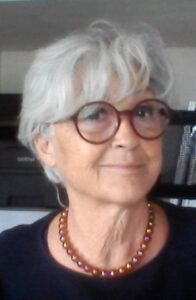
Giovanna Guslini is an expert in Public Anthropology and Education.
She graduated with honours in 1977 at the Catholic University of Milan, Italy, obtaining the title of “Dottoressa in Materie Letterarie” (Humanities). After defending her thesis in Cultural Anthropology / Ethnology on the artistic expressions of the Rundi in Africa, she did research in different countries (Burundi, Algeria, Saudi Arabia, and Ethiopia), spending between one and three and a half years in each. She worked both in development cooperation projects and in educational institutions abroad, under the supervision of the Italian Ministry of Foreign Affairs.
Her subsequent work in Italy and Europe consisted mainly in transferring her anthropological skills, expertise and research abroad into educational and public initiatives.
Inside the Italian Ministry of Education, University and Research, she designed, promoted, coordinated and monitored local / international and inter-institutional research and staff training pilot projects, including:
– e-Twinning and Med Twinning pilot training projects (European Commission) on collaborative learning across countries, cultures and disciplines (2003-2013)
– European competition “Science and Creativity in the Classroom” with the Joint Research Centre of the European Commission (2009)
– Japanese, Arabic and Chinese cultures and languages, first experimental courses in Italy, in secondary schools (now mainly curricular) (2003-2008)
She served in national and international committees to develop new school curricula and reform upper secondary education, leading to the introduction of the ‘Liceo’ with a humanities stream (including anthropology) as one of the six specialisations (2010).
Giovanna is the author of a wide range of texts on internationalisation and ‘hands-on’ public anthropology: books, short stories, articles, exhibition itineraries, website contents and policies for implementing school projects. She continues to work towards fostering an international mindset among diverse audiences of all ages, using creativity and storytelling to promote cultural understanding and awareness through new forms of expression.
She is the chair of the IUAES Commission on Anthropology and Education, a Convenor of the Teaching Anthropology Network of EASA, Fellow of the Royal Anthropological Institute, Giovanna Guslini is also the Chair of the WCAA Task Force on “Anthropological Education and New Audiences”.
DEPUTY CHAIR: Marzia Balzani, New York University Abu Dhabi, United Arab Emirates (UAE)
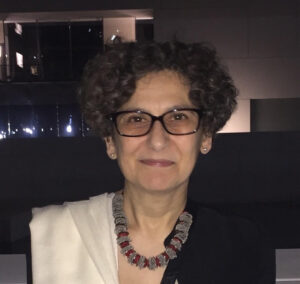
Marzia Balzani is Professor of Anthropology at New York University Abu Dhabi. She has taught socio-cultural anthropology for over 35 years in the UK and Middle East at both undergraduate and graduate levels. In universities in the UK and UAE she has established and chaired anthropology programmes.
Balzani has expertise in curriculum review and design, the production of national and international anthropology examinations at the pre- university level, assessment criteria, and the production of teaching materials. She has designed and led workshops for teachers of anthropology and has served terms as chief examiner for both the International Baccalaureate Social and Cultural Anthropology Programme and the Anthropology A level, publishing articles on both and recently editing a special section in Teaching Anthropology on pre-university education (Teaching Anthropology 2025, Vol.14, no.2). She has also co-authored a textbook on social and cultural anthropology (Social and Cultural Anthropology for the 21 st Century: Connected Worlds, 2023, Routledge, with Niko Besnier).
Balzani is a member of the RAI Education Committee, deputy chair of the IUAES Scientific Commission on Anthropology and Education, and a convenor of the EASA Teaching Anthropology Network. She is also a member of the Société Internationale d’Ethnologie et de Folklore (SIEF). Balzani is also an anthropologist of South Asia with research interests in political ritual, kingship, gender, migration, the Pakistani diaspora and asylum, and has recently turned her ethnographic attention to central Italy.
SOCIAL MEDIA COORDINATOR: Yashmine Tabasoom, Pondicherry University, India
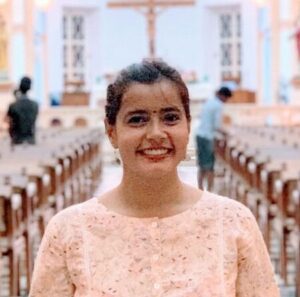
Yashmine Tabasoom (Ph.D.) is a medical anthropologist with an M.Phil. and Master’s degree in Anthropology from the University of Lucknow and National Post Graduate College and doctorate in Social-cultural Anthropology from Pondicherry University. Her work bridges the cultural dimensions of health with the realities of biomedical care. Her current research centres on the quality of healthcare among the Tharu community in Uttar Pradesh, India, exploring how cultural beliefs, practices, and values shape health outcomes and medical decision-making. She works to make healthcare more fair and focused on the needs of local communities. She supports research that listens to people’s cultural beliefs and everyday experiences, especially those from groups who are often overlooked—so that healthcare can better serve everyone.
Her research work shows that education, as a formal institution, plays a key role in improving healthcare by helping people understand health better, training professionals to be more culturally aware, and making services more inclusive. Outside of her academic work, she supports global outreach as a social media intern for the IUAES Commission on Anthropology and Education, and contributes to the WCAA Task Force on Anthropological Education and New Audiences. Through these roles, she helps share ideas about how anthropology and education can work together to create fairer, more responsive healthcare systems.
SOCIAL MEDIA INTERN: Bhumika Raj Sonwane, Pt. Ravishankar Shukla University, Raipur, Chhattisgarh, India
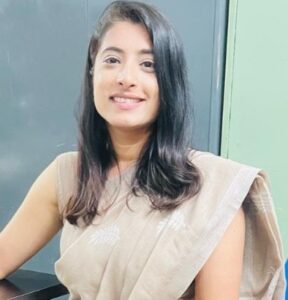
Bhumika Raj Sonwane (Ph.D.) is a socio-cultural anthropologist specializing in Indigenous knowledge systems from Pt. Ravishankar Shukla University, Raipur, Chhattisgarh. She holds a Master’s degree in Anthropology, and a Ph.D. focused on Indigenous Knowledge, Traditional Technology, and Epistemology of the Kamar, a Particularly Vulnerable Tribal Group (PVTG) of Chhattisgarh State, India. Her doctoral research provides a sustained ethnographic and epistemological analysis of the Kamar, indigenous ecological knowledge, eco-cosmology, healthcare practices, and traditional technologies by interpreting them as internally coherent and dynamic knowledge systems rather than fragmented cultural elements.
Grounded in participatory ethnography and Indigenous Research Methodology, her work foregrounds community-led narratives, oral traditions, relational accountability, and decolonial frameworks. Her research shows how Indigenous ecological knowledge systems can help protect biodiversity by managing how resources are used, keeping different species alive, and ensuring a healthy balance between people and the environment through traditional practices and beliefs.
She currently serves as a Social Media Intern with the IUAES Commission on Anthropology and Education. This role will support her commitment to advocating for the systematic integration of Indigenous ways of knowing in higher education frameworks, fostering epistemic diversity and more environmentally responsive academic discourse.
BOARD MEMBERS:
Alexander Cordoves, Independent researcher, Cuba
Antonella Tassinari, Federal University of Santa Catarina – Brazil
Edmund ‘Ted’ Hamann, University of Nebraska-Lincoln, USA
Jose Rene Sansait, University of the Philippines Visayas, Philippines
Joy Hendry, Oxford Brookes University UK
Leonardo Campoy, UPE, Brazil
Maxim Repetto, UFDPar / ABA – Brazil
Mimina Pateraki, Hellenic Open University/University of St Andrews UK, Greece
Roberta Bonetti, University of Bologna, Italy
Satoshi Arai, Ministry of Education, Culture, Sports, Science and Technology, Japan
Shelene Gomes, University of the West Indies (Trinidad and Tobago) & University of Cape Town (affiliate)
Skilty Labastilla, Ugnayang Pang-Aghamtao / Ateneo de Manila University, Philippines
Subhadra Channa, Delhi University, India
Caroline Gatt, Universität Graz, Austria
TO STAY INFORMED
Visit the Commission’s Facebook Page
Visit the Commission’s Instagram Page
Visit the Commission’s LinkedIn Page
Visit the WCAA Task Force’s Web Page
Visit the RAI Website to learn more about the history of the Commission
TO JOIN US
If you are interested in joining the IUAES Commission on Anthropology and Education contact education.iuaes[at]gmail.com or complete the sign-up form to become a member. To join, you must already be a member of the IUAES. Find out more information here.